


 Your dentist placed a crown, and for a while, things felt fine. But now something has shifted, whether it is recurring pain, a tooth that cannot be saved, or a gap where a tooth used to be, and you are wondering if a crown is still the right answer. It is one of the most common crossroads patients face, and the distinction between what a crown can fix and when an implant becomes necessary is more important than most people realize.
At Dental Associates of Jersey City, we help patients navigate these decisions every day. Our team, led by Dr. Andriy Yuzvyak, a prosthodontist who trained at NYU’s Jonathan and Maxine Ferencz Advanced Education Program in Prosthodontics, brings a deep understanding of both restorative and implant-based solutions to every case. Whether you are evaluating options for the first time or have already had a crown fail, our dental implant services are designed to give you a long-term solution built to last.
What a Crown Does and What It Cannot Do
A dental crown is a cap placed over a damaged but still-rooted tooth. It protects the remaining structure, restores function, and improves appearance. Crowns work well when the underlying tooth root is healthy, and there is enough natural tooth structure remaining to anchor the crown securely. The key phrase there is “remaining structure.” When decay, fracture, or prior dental work has consumed too much of the tooth, a crown loses its foundation and simply cannot perform as intended.
Crowns also cannot address the root-level damage. If a tooth has fractured below the gumline, developed an infection that has spread into the bone, or experienced severe root resorption, no crown can reverse those conditions. In those cases, extracting the tooth and replacing it entirely becomes the more appropriate path. As noted by NIH StatPearls, dental implants have become an increasingly standard option for single-tooth replacement, particularly because they replace the entire tooth without affecting adjacent healthy teeth the way a crown-supported bridge would.
Signs a Crown May No Longer Be Sufficient
Not every case is clear-cut, but there are reliable indicators that a crown has reached its limits. Understanding these signs can help you have a more informed conversation with your provider before committing to a treatment plan.
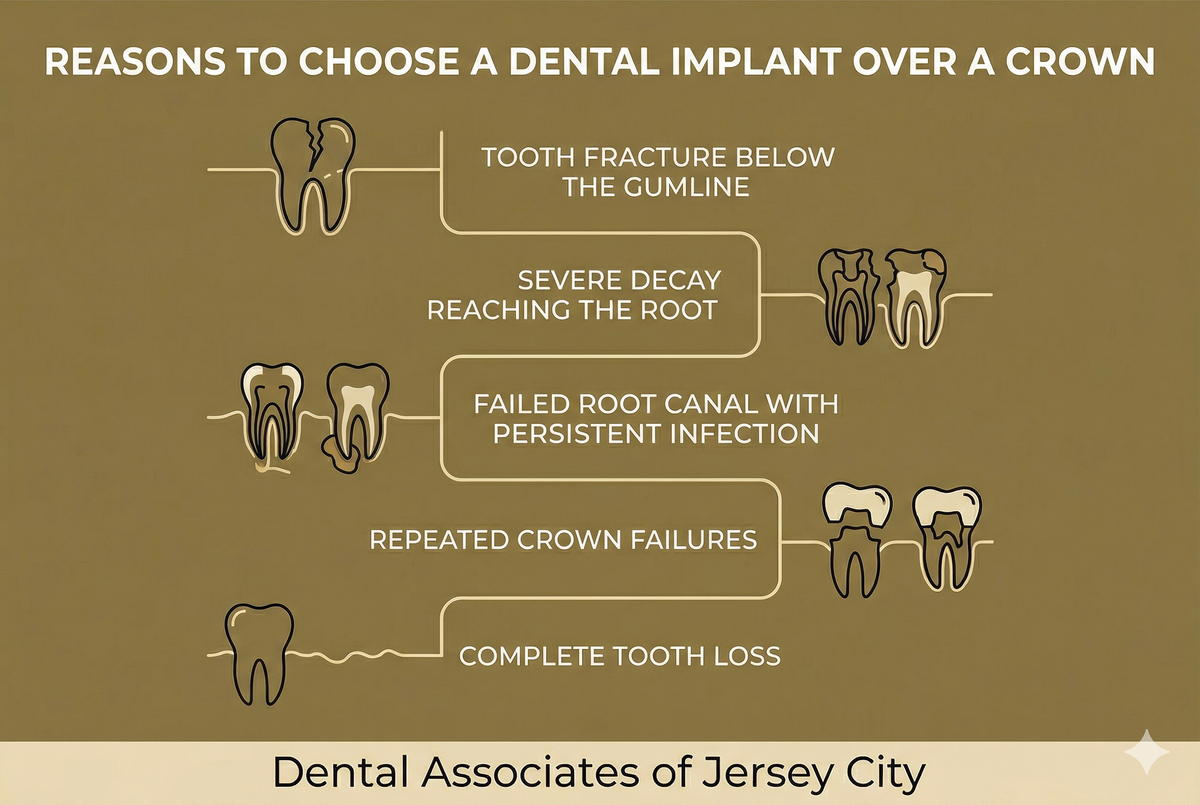
The situations most likely to indicate an implant is needed include:
- Tooth fracture below the gumline: When the break extends into the root, there is no longer enough tooth structure to support a crown restoration.
- Severe decay reaching the root: Deep decay that has compromised the root itself often makes the tooth non-restorable.
- A failed root canal with persistent infection: Repeated root canal failures combined with bone loss around the root are strong indicators that extraction is the better path.
- Repeated crown failures: A tooth that has had multiple crowns placed and continues to break down may not have the structural integrity to support another restoration.
- Complete tooth loss: When the tooth is already gone, a crown is not an option at all, and an implant becomes the primary replacement consideration.
Recognizing these signs early gives patients more options and better outcomes. Waiting too long can result in bone loss that complicates implant placement down the road.
The Role of Bone Health in the Decision
One of the most overlooked factors in the crown-versus-implant conversation is what happens to the jawbone after a tooth is lost or extracted. The bone surrounding a tooth root depends on that root for stimulation. Without it, the bone begins to resorb, which can change the shape of your jaw, affect neighboring teeth, and ultimately reduce the bone volume needed for a successful implant. This is why timing matters considerably. Placing an implant sooner after extraction, before significant bone loss occurs, generally leads to a more straightforward process.
In cases where bone loss has already occurred, procedures such as bone grafting may be recommended to rebuild the site before implant placement. Our team evaluates each patient’s bone density and jaw anatomy carefully before recommending a treatment sequence, ensuring the plan we develop is realistic and built for long-term success.
How Implants and Crowns Work Together
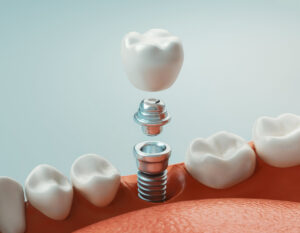
It is worth clarifying that implants and dental crowns are not always competing options. In many implant restorations, a crown is placed on top of the implant post as the visible, functional tooth. The difference is that in this configuration, the crown is anchored to a titanium implant fused with the jawbone rather than to a compromised natural tooth. This gives the crown a stable, lasting foundation that a damaged tooth simply cannot provide. Patients who previously needed root canal therapy on a tooth that later failed are often good candidates for this combined approach.
Dental Associates of Jersey City: Implant Care You Can Trust
At Dental Associates of Jersey City, every member of our team maintains the highest levels of accreditation and pursues ongoing education to stay current with the latest advances in implant dentistry. Dr. Yuzvyak has developed his own protocol for full arch rehabilitation and is deeply committed to improving patients’ quality of life through prosthetic and implant care. Our doctors work together to assess each case thoroughly, making sure the recommendation you receive reflects your specific anatomy, history, and goals.
If you are unsure whether a crown is still the right solution for your situation, or if you have been told a tooth may need to come out, we encourage you to contact our office and schedule a consultation today. Getting the right answer now protects both your smile and your long-term oral health.